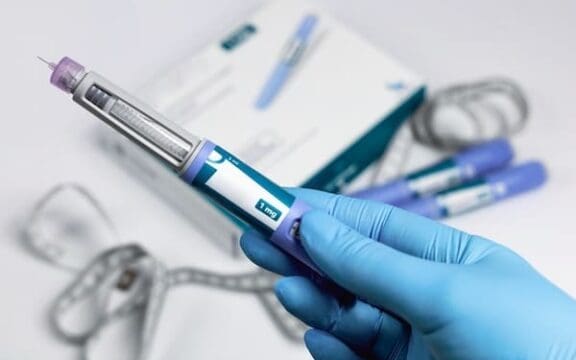




When you hear the word “ketamine,” you might think of club drugs or even anesthesia. But in recent years, ketamine—and its close cousin, esketamine (Spravato)—has been receiving much attention in the field of mental health, including for its rapid ability to treat Depression. A new review addresses an important question: Does ketamine improve quality of life for people with Depression?
Let’s explore what researchers have discovered.
Depression’s Toughest Challenge: Treatment Resistance
Depression is a leading cause of disability worldwide. But what happens when standard treatments—psychotherapy and conventional antidepressants—just don’t work?
That’s where Treatment-Resistant Depression (TRD) comes in. It affects about 30% of people with major depressive disorder (MDD). These individuals have tried two or more antidepressants without getting better.
For them, traditional treatments can feel like hitting a wall. But ketamine and esketamine have emerged as potential game-changers that could enhance quality of life for people suffering from Depression.
From Symptom Relief to Real-Life Improvement with Ketamine for Depression
It’s already well-known that ketamine and esketamine can relieve depressive symptoms fast—sometimes within hours. But until now, it wasn’t clear if that translated into something more meaningful for patients: an improved quality of life (QoL).
That’s the question Cheng and colleagues tackled in their 2025 systematic review recently published in the Journal of Affective Disorders. They looked at existing studies to see if ketamine and esketamine help patients feel better—not just in clinical scores, but in how they live and function day-to-day.
What Did the Research Show About Whether Ketamine Improves Quality of Life?
The review included five studies with a total of 1,688 adults with either MDD or TRD. Some received intravenous ketamine, others used intranasal esketamine (the FDA-approved version).
The good news? Across all studies, patients reported significant improvements in quality of life from ketamine or esketamine. Researchers used several different tools to measure QoL, like the WHOQOL-BREF, the EQ-5D-5L, and the AQoL-8D—each assessing things like physical health, mental well-being, social relationships, and daily functioning.
Here’s what stood out:
- Hopwood et al. (2024) found that after 16 weeks of esketamine, patients reported up to 20% improvement across all QoL dimensions.
- Liang et al. (2024) showed that even after nine months, repeated ketamine infusions led to sustained quality-of-life benefits.
- Other studies showed that esketamine helped people feel better across everyday domains—from pain and mobility to anxiety and self-care.
A Promising Start to Quality of Life Improvement with Ketamine, But Not a Perfect Picture
Now, before we all rush to call ketamine a miracle cure, there are a few caveats:
- First, the overall quality of the evidence was moderate at best. Many of the studies were small or not randomized, and a couple were funded by drug manufacturers.
- Second, most of these studies weren’t focused specifically on QoL—they just measured it as a secondary outcome, meaning we don’t yet have detailed data on which parts of life improve and why.
- And third, most of the data comes from esketamine, not ketamine. While similar, they’re not identical—and more comparative research is needed.
So, How Might Ketamine Improve Life Beyond Symptoms?
The most likely explanation is that better quality of life from ketamine and esketamine follows better symptom control. As Depression lifts, people tend to feel more motivated, more socially engaged, and more functional.
But there may be more to the story. Some experts think ketamine’s rapid action might also spark changes in cognitive flexibility, anhedonia (the loss of pleasure), and even neuroplasticity—all of which could help people reconnect with meaningful aspects of their lives.
The Road Ahead: What’s Still Missing?
This review is a big step forward, but there’s still work to do. Future studies should:
- Track long-term outcomes (not just short-term relief)
- Focus on specific areas of life improvement (like work, relationships, or self-esteem)
- Compare ketamine with other new treatments like dextromethorphan-bupropion
- Include more diverse populations and real-world settings
The Bottom Line: A Glimpse of Hope from Ketamine for Depression Treatment
For people living with MDD or TRD, ketamine and esketamine offer more than a new treatment—they offer a new hope for their quality of life. Early research suggests they can not only lift the heavy cloud of Depression but also help patients feel more whole, more functional, and more alive.
As always, this isn’t a one-size-fits-all solution. But with more research and a deeper understanding of patient-reported outcomes, we may be moving closer to what really matters in mental health treatment: not just surviving, but thriving.
Interested in learning more about innovative treatments for Depression? Follow us at Mid City TMS for updates on the latest in mental health research and emerging therapies or contact us today if you are in need of treatment.
Sources
Cheng, M.C.H., Dri, C.E., Ballum, H., Valentino, K., Cheung, W., Teopiz, K.M., Wong, S., & McIntyre, R.S. The Effects of Ketamine and Esketamine on Measures of Quality of Life in Major Depressive Disorder and Treatment-Resistant Depression: A Systematic Review. Journal of Affective Disorders. https://www.sciencedirect.com/science/article/pii/S0165032725006949