




Major Depressive Disorder (MDD) remains one of the most difficult psychiatric conditions to treat. Traditional antidepressants can be effective, but many patients experience inadequate relief, difficult side effects, or long delays before improvement. For patients with treatment-resistant Depression, these limits can be especially discouraging.
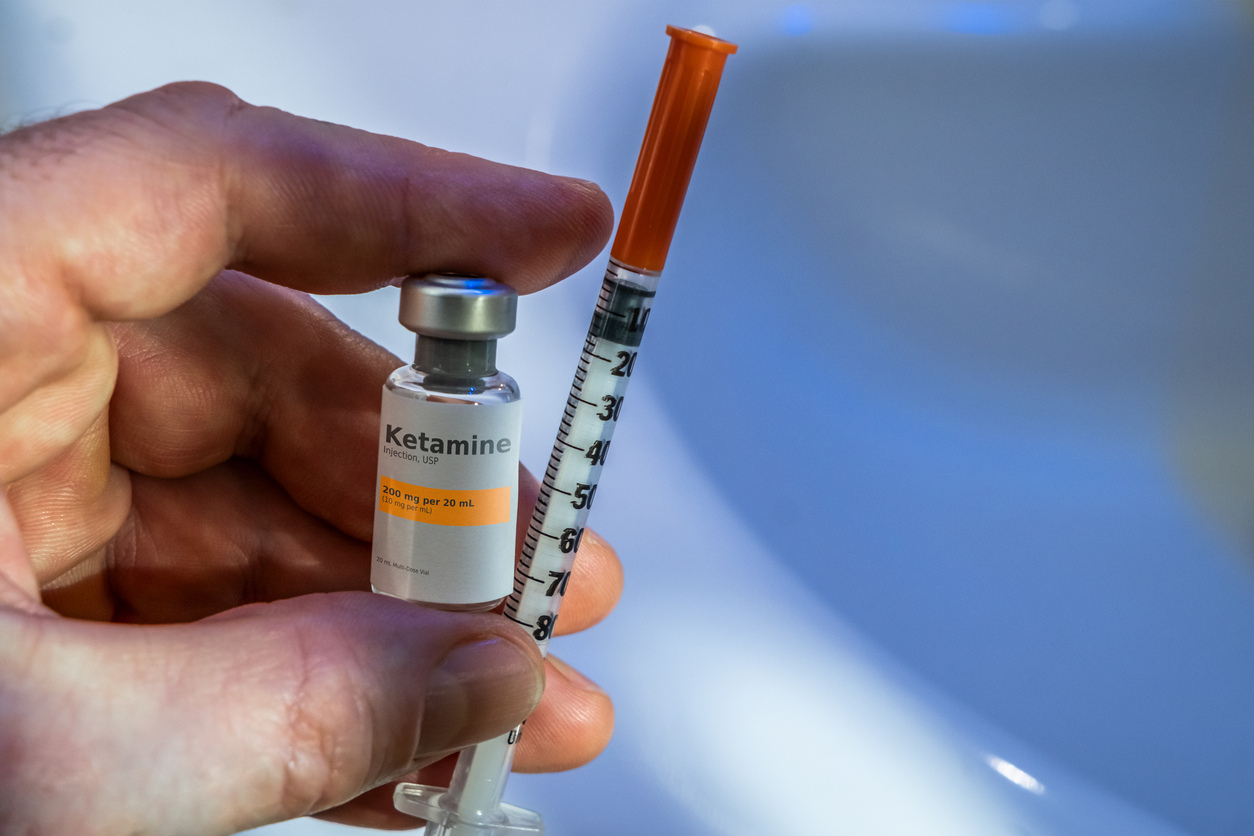
In recent years, ketamine has drawn attention as a rapid-acting antidepressant. A study published in the American Journal of Psychiatry examined an often-overlooked aspect of ketamine’s effects: its entactogenic properties, meaning its capacity to increase emotional openness, empathy, and social connection. At the same time, esketamine (Spravato), an FDA-approved treatment related to ketamine, has made a version of this approach available in clinical settings such as Mid City TMS. Here is what the study found, and how it relates to esketamine treatment.
Depression as a Disorder of Disconnection
Depression is increasingly understood as involving more than mood alone. Research points to disruptions in emotional processing, reward systems, social connection, and cognitive flexibility. Patients often describe emotional numbness, loss of pleasure (anhedonia), withdrawal from relationships, and difficulty feeling connected to others. These symptoms show that Depression affects a patient’s capacity for meaning and connection, not mood in isolation.
What Are Entactogenic Effects?
The term entactogen refers to substances that promote emotional openness, empathy, interpersonal connection, and introspection. The class is most closely associated with MDMA, but the study in question suggests that ketamine may produce psychologically similar effects through different neurobiological pathways. This raises a meaningful question: could ketamine’s antidepressant effects involve changes in emotional and social experience, not brain chemistry alone?
Inside the Study
Researchers at the National Institute of Mental Health studied 68 participants with treatment-resistant Depression, drawn from three earlier trials. The group included patients with recurrent MDD (27 participants) and Bipolar Disorder I or II (41 participants) who were experiencing a current depressive episode and had not responded to at least one antidepressant or mood stabilizer trial. Using a placebo-controlled, crossover design, each participant received a single ketamine infusion (0.5 mg/kg) and, on a separate occasion, a placebo infusion. Researchers then tracked four items from the Snaith-Hamilton Pleasure Scale (SHAPS) related to social enjoyment: pleasure from being with family or close friends, seeing others smile, helping others, and receiving praise, measured at five points over the following week.
To test whether ketamine’s effects on social behavior held up across species, the same research team studied rats using a harm aversion task, which measures whether an animal will forgo a reward to prevent a companion from receiving a mild shock.
Key Findings
Increased pleasure from social interaction. Relative to placebo, ketamine increased self-reported pleasure across all four social items on the SHAPS, with effect sizes (log odds ratios) ranging from about 1.2 to 1.5 and each result reaching statistical significance. Participants reported more enjoyment from time with family or friends, from seeing others smile, from helping others, and from receiving praise.
Increased helping behavior in rats. In the harm aversion task, rats given ketamine delivered fewer shocks to their cage mate after treatment than rats given saline, and they maintained this harm-averse behavior through day seven, while the saline group returned to baseline behavior by day five. This suggests the pro-social effect was not limited to self-report in humans, but appeared in a separate behavioral model as well.
An Important Caveat
The study’s authors were careful to note a key limitation: in the human data, the increase in social pleasure was not statistically independent of ketamine’s overall antidepressant effect. When the researchers accounted for each patient’s depression rating scale (MADRS) score at each time point, the effect on social pleasure was no longer significant on its own. In other words, in humans, the entactogenic effect could not be clearly separated from ketamine’s general antidepressant effect in this dataset. The rat findings, measured through behavior rather than self-report, offered more direct evidence of a pro-social effect independent of mood improvement. This distinction matters for how the findings should be interpreted, and it is a reminder that a single study, however well designed, does not settle the question of mechanism.
How Ketamine and Esketamine Work
Ketamine and esketamine act through a mechanism distinct from traditional antidepressants. Esketamine (Spravato), the FDA-approved form used in clinical practice, is the S-enantiomer of ketamine and works primarily by modulating glutamate, the brain’s main excitatory neurotransmitter. It blocks NMDA receptors on inhibitory neurons, which increases glutamate release and activates downstream pathways, including AMPA receptors and BDNF, supporting synaptic plasticity and new neural connections. Unlike traditional antidepressants, which can take weeks to work, esketamine can lead to symptom improvement within hours to days.
What Is Esketamine (Spravato)?
Esketamine is a nasal spray medication approved by the FDA for treatment-resistant Depression and for Depression with acute suicidal ideation or behavior. It is administered intranasally in a medical setting, has a rapid onset of antidepressant effect, can be used alone or with oral antidepressants, and requires monitoring after each session for safety.
How This Research Relates to Esketamine
The study discussed here tested ketamine directly, not esketamine, and it is worth being precise about that distinction. Esketamine shares ketamine’s core mechanism and many of its reported effects, including rapid mood improvement and, based on patient reports in clinical practice, increased emotional accessibility during and after treatment. Whether esketamine produces the same entactogenic effects observed with ketamine in this study, and to what extent those effects are separate from its antidepressant action, has not been directly tested and should be treated as a reasonable hypothesis rather than a settled finding.
How Mid City TMS Integrates Esketamine Treatment
At Mid City TMS, we offer esketamine (Spravato) therapy alongside transcranial magnetic stimulation (TMS) as part of a broader treatment program. Esketamine treatment at Mid City TMS includes a psychiatric evaluation to determine eligibility, administration in a controlled clinical setting, monitoring for approximately two hours after each session, and integration into a broader treatment plan, consistent with FDA requirements.
Why Offer Both TMS and Esketamine?
Depression does not respond the same way in every patient. TMS offers non-invasive brain stimulation, no systemic medication effects, and gradual, durable improvement, a mechanism we describe further in our post on how TMS improves brain connectivity. Esketamine offers rapid symptom relief and may be appropriate for more severe or urgent presentations of Depression. Having both available allows for a personalized treatment plan based on a patient’s history, symptoms, and needs.
Safety and Monitoring
Esketamine is administered under medical supervision because of the potential for temporary dissociation or perceptual changes, possible increases in blood pressure, and the need for post-treatment observation. These effects are typically short-lived and resolve within a few hours, which is why treatment takes place in a controlled clinical setting with monitoring built into every session.
What This Means for Patients
This research adds to a growing picture of Depression as a condition that affects more than mood, including a patient’s capacity for connection with others. It also reinforces the value of being precise about what current evidence does and does not show. Ketamine’s entactogenic effects are a genuine and interesting research finding, but in humans they have not yet been clearly separated from its broader antidepressant effect, and the compound tested was ketamine itself rather than esketamine.
If you or a loved one has Depression that has not responded to standard treatment, learn how Mid City TMS can help determine whether esketamine, TMS, or a combination of both is the right next step. Contact us today to schedule an evaluation.
Sources
- Hess, E. M., Greenstein, D. K., Hutchinson, O. L., Zarate, C. A., & Gould, T. D. (2024). Entactogen Effects of Ketamine: A Reverse-Translational Study. The American journal of psychiatry, 181(9), 815–823. https://doi.org/10.1176/appi.ajp.20230980
- Gorwood P. (2008). Neurobiological mechanisms of anhedonia. Dialogues in clinical neuroscience, 10(3), 291–299. https://doi.org/10.31887/DCNS.2008.10.3/pgorwood