



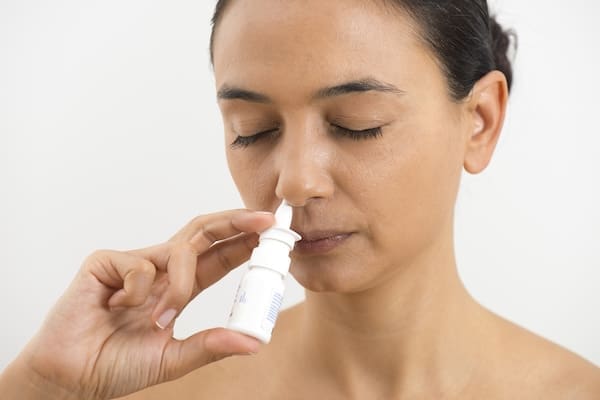


For many people living with Depression, the path to relief is not straightforward. Traditional antidepressants like SSRIs and SNRIs help millions, but some patients don’t respond at all, even after trying multiple medications. Earlier this year however, the Spravato monotherapy approval began changing the landscape of Depression treatment for good.
A landmark 2025 study by Janik and colleagues, published in JAMA Psychiatry, tested whether Spravato could be used as an effective standalone treatment—or “monotherapy”—for treatment-resistant Depression, or TRD. The results are giving new hope to patients and providers alike.
The Spravato Monotherapy Approval: How it Impacts the Future of Depression Care
Spravato is a nasal spray form of esketamine, a medication related to ketamine. Unlike standard antidepressants, which primarily target serotonin and norepinephrine, esketamine works on the glutamate system in the brain. This leads to rapid changes in brain connectivity, helping to “reset” neural pathways involved in mood regulation.
That’s why many patients report feeling improvements within hours or days, compared to the weeks or months typical antidepressants often require. Until recently, Spravato was only approved when administered in combination with another oral antidepressant. But many patients and clinicians were left wondering: Can Spravato really work on its own?
Unpacking the 2025 Study: First Trial of Spravato as Monotherapy
Until recently, treatment options were limited. Patients often cycled through medications, combined multiple drugs, or turned to augmentation strategies. But in 2019, the FDA approved Spravato (esketamine nasal spray) as an adjunctive therapy, meaning it was used alongside a traditional antidepressant. Six years later, in January 2025, the FDA approved the use of Spravato as a Monotherapy (with no need for its usage to be accompanied by a traditional antidepressant).
The 2025 Janik et al. JAMA Psychiatry study is the first large-scale, double-blind, randomized controlled trial to evaluate Spravato as a monotherapy in adults with treatment-resistant Depression.
JAMA Psychiatry Study Design
The overarching study design was as follows:
- Participants: 379 adults diagnosed with TRD across multiple clinical sites.
- Treatment: Patients were randomly assigned to either a Spravato® monotherapy regimen (self-administered nasal spray in clinic, under supervision), or to a Placebo nasal spray.
- Duration: 4-week double-blind phase followed by optional open-label continuation.
- Primary Outcome Examined: Change in Depression severity, measured by the Montgomery-Åsberg Depression Rating Scale (MADRS).
- Secondary Outcomes Examined: Rates of Depression remission, response, and safety/tolerability of treatment.
Key Findings
The study’s key findings were remarkable. At the conclusion of the study, researchers found:
1. Rapid Symptom Reduction
By day 8, patients receiving Spravato had significantly greater reductions in MADRS scores compared to placebo. This difference grew stronger over the 4-week trial.
2. Higher Remission Rates in Spravato Patients
At week 4, 21% of patients on Spravato achieved remission (virtually no depressive symptoms), compared to 11% on placebo.
3. Improved Response Rates
About 36% of Spravato patients showed a clinical response (≥50% reduction in symptoms) versus 24% with the placebo.
4. Safety and Tolerability
Common side effects included dissociation, dizziness, nausea, and headache. Most side effects were short-lived, resolving within a few hours after dosing. Only a small percentage discontinued due to adverse events.
The Janik study is more than just another clinical trial; it represents a fundamental and groundbreaking shift in the treatment landscape for TRD. For the first time since its initial FDA approval, Spravato has been shown to be effective as a stand-alone therapy. This means that patients who have not responded to multiple oral antidepressants, or cannot tolerate the side effects of traditional medications may now have a new, evidence-based option backed by rigorous, cutting-edge science.
Why The Spravato Monotherapy Approval and the 2025 Study Findings Matter to Patients
At Mid City TMS in New York City, we’ve always been at the forefront of innovative treatments for Depression and the Spravato monotherapy approval has informed how we care for our patients every day. Prior to the Janik study, Spravato was only used with another antidepressant. But many patients with TRD have already tried—and unfortunately failed—multiple oral medications.
The ability to use Spravato alone offers several noteworthy advantages for our patients:
- Fewer pills: Patients don’t need to take an additional antidepressant daily.
- Reduced side effects: Eliminating the need for SSRIs/SNRIs means avoiding issues like weight gain, sexual dysfunction, or GI upset.
- Simpler, more cost effective treatment plans: A single therapy may improve adherence and outcomes.
For patients who are tired of failed medication trials, Spravato monotherapy could represent a new, streamlined path forward. One of the most striking aspects of Spravato is its remarkable speed of action. Traditional antidepressants often take 4–8 weeks before a patient notices meaningful change. In contrast, the 2025 study found that many patients on Spravato experienced improvements in just one week; this rapid effect can be critical for patients struggling with severe, disabling Depression.
In addition, Spravato acts through a completely different biological pathway (glutamate vs. serotonin/norepinephrine). This makes it effective even when standard antidepressants have failed to produce results.
Safety Considerations: What Patients Should Know
Like any medical treatment, Spravato has potential side effects. In the 2025 study, the most common of these potential side effects were:
- Dissociation (the feeling of being “out of body” or detached from one’s surroundings)
- Dizziness
- Headache
- Nausea
Because of this, Spravato must be administered in a certified treatment center under medical supervision and patients cannot drive until the day after treatment (though most effects were mild to moderate and resolved within 1–2 hours).
Mid City TMS provides a comfortable, safe environment where patients are monitored throughout their session. Our clinicians are trained to manage any side effects, ensuring that each patient’s experience is as smooth as possible.
Mid City TMS: Bringing Innovative Treatments to New York City
The recent 2025 Spravato monotherapy approval alongside the Janik et al. findings provide compelling evidence that Spravato can work as a monotherapy, offering new hope for people struggling with treatment-resistant Depression. We’re proud to bring this cutting-edge, FDA-approved treatment directly to patients across New York City and surrounding areas.
At Mid City TMS, we specialize in advanced therapies for treatment-resistant Depression, including Transcranial Magnetic Stimulation (TMS) and Spravato (esketamine) treatments. Located conveniently in Manhattan, our center provides a professional, supportive environment where patients can focus wholeheartedly on healing.
If standard treatments haven’t worked for you, it may be time to explore whether Spravato or TMS therapy could help. Contact us today to schedule a consultation and learn if these treatments are right for you.
Sources
- Esketamine CIII Nasal Spray: First and Only Monotherapy for Treatment-Resistant Depression. Psychiatric Times. https://www.psychiatrictimes.com/view/esketamine-ciii-nasal-spray-first-and-only-monotherapy-for-treatment-resistant-depression Psychiatric Times
- Johnson & Johnson. SPRAVATO® (esketamine) approved in the U.S. as the first and only monotherapy for adults with treatment-resistant depression. Press Release. https://www.jnj.com/media-center/press-releases/spravato-esketamine-approved-in-the-u-s-as-the-first-and-only-monotherapy-for-adults-with-treatment-resistant-depression JNJ.com
- Janik, A., Qiu, X., Lane, R., Popova, V., Drevets, W. C., Canuso, C. M., Macaluso, M., Mattingly, G. W., Shelton, R. C., Zajecka, J. M., & Fu, D.-J. Esketamine Monotherapy in Adults With Treatment-Resistant Depression: A Randomized Clinical Trial. JAMA Psychiatry. https://jamanetwork.com/journals/jamapsychiatry/fullarticle/2836115